

East Med Gas Growth Depends on Infrastructure, Policy Clarity
East Mediterranean gas could supply up to 60 Bcm to Europe, but infrastructure gaps and regulatory barriers remain the main obstacles to development, speakers said at CERAWeek.
By Mary Holcomb, Digital Lead
HOUSTON (P&GJ) — East Mediterranean gas is not constrained by supply. It is constrained by infrastructure.
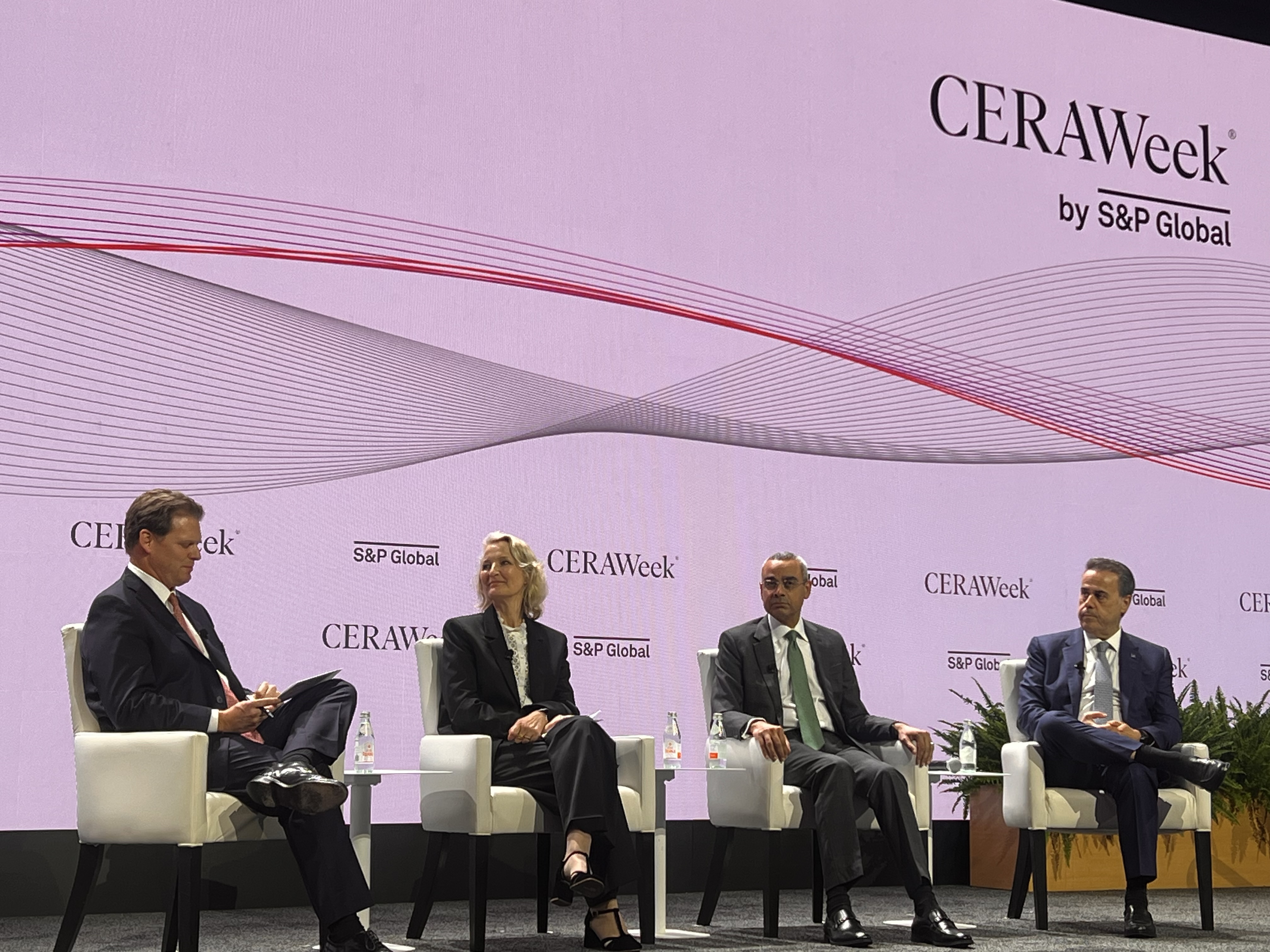
That was the clear message from speakers at the CERAWeek by S&P Global conference in Houston, where policymakers and industry leaders pointed to pipeline connectivity, LNG capacity and regulatory alignment as the main barriers to development.
The panel included Ditte Juul-Jørgensen, Director-General for Energy at the European Commission; Osama Mobarez, Secretary General of the East Mediterranean Gas Forum; and Stavros Papastavrou, Greece’s Minister for the Environment and Energy.
The East Med holds enough gas to make a difference, particularly for Central and Southeastern Europe. But without additional pipelines, LNG capacity and cross-border integration, much of that supply remains difficult to access.
“The East Mediterranean… has a huge potential,” Mobarez said, pointing to an estimated 50 to 60 Bcm of potential supply for nearby markets.
The issue is not availability. It is connectivity.
Much of the existing infrastructure is either incomplete or underutilized, and moving gas across multiple jurisdictions remains costly. European officials said the region is undergoing a shift in how gas flows are routed, with new north-south movements replacing older east-west patterns. That transition is improving flexibility, but also underscores the need for additional investment.
At the same time, Europe’s demand outlook continues to support new projects. Natural gas is expected to remain part of the energy mix for at least the next two to three decades, supporting long-term contracts and infrastructure buildout.
Greece is positioning itself at the center of that effort through its proposed vertical corridor, which would move gas from LNG import points and regional supply sources into Central and Eastern Europe as the region works to replace Russian volumes.
“Energy security, in the end, is national security and European security,” Papastavrou said.
Regulatory challenges remain a key obstacle. Cross-border tariffs and inconsistent policies continue to limit the use of existing infrastructure and weigh on project economics.
Officials said efforts are underway to streamline those structures and create more competitive transport frameworks, but alignment across countries remains a work in progress.
For developers and investors, clearer regulatory signals will be critical. Without them, infrastructure expansion will continue to lag behind available supply.